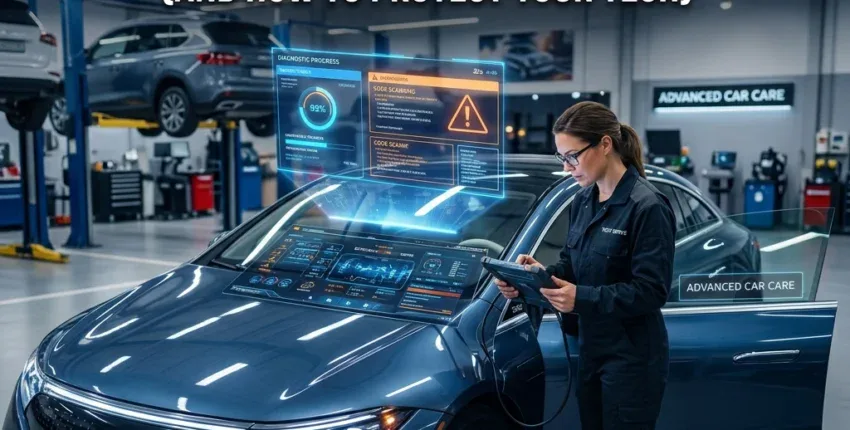
You’re driving down Broadway in Sleepy Hollow, enjoying the view of the Hudson, when suddenly: ding. A light flashes on your dashboard. It isn’t the old-school “oil can” icon your dad’s truck used to show. It’s a complex-looking symbol accompanied by a message about your “Driver Assistance System.”
Ouch.
The reality is that modern cars aren’t just machines anymore; they are sophisticated, rolling supercomputers. While the mechanical bones: the pistons, the gears, the brakes: are still there, they are now wrapped in layers of sensors, software, and delicate electronics. At Mickey’s Automotive, Inc., we see it every day: well-meaning drivers treating their 2024 SUV like it’s a 1994 sedan.
Mistakes in car maintenance services today don’t just lead to greasy hands; they lead to fried circuit boards and four-figure repair bills. If you want to keep your high-tech ride running smoothly through the streets of Sleepy Hollow, you need to avoid these seven common pitfalls.
1. Treating the Check Engine Light Like a “Suggestion”
We’ve all been there. The light comes on, the car feels fine, and you figure you’ll get to it “eventually.” In an older car, you might have had a few weeks. In a modern vehicle? That light is often the only warning you get before a sensor failure cascades into a major system shutdown.
Modern engines rely on a delicate balance of data. If one sensor: like an oxygen sensor or a mass airflow sensor: starts sending “bad data,” the computer tries to compensate. This often leads to poor fuel economy or, worse, damage to your catalytic converter. Ignoring that light is essentially ignoring your car’s brain when it’s screaming for help.
Want to know if you can keep driving or if you need to pull over immediately? Check out our guide on check engine light meanings to stay safe.
2. Using “Generic” Fluids in High-Tech Engines
Back in the day, oil was oil. You’d grab whatever was on sale at the local shop and call it a day. Those days are gone. Modern engines have incredibly tight tolerances: we’re talking gaps smaller than a human hair.
Using the wrong grade of synthetic oil or a generic coolant can lead to “sludge” buildup. This sludge doesn’t just slow things down; it can clog the tiny passages that lubricate your turbocharger or variable valve timing system. When those systems fail, the repair isn’t just a simple fix; it’s an engine teardown. Honest advice? Always stick to the manufacturer’s specifications. It’s a few extra dollars now to save thousands later.

3. Forgetting the “Other” Updates: Software
Did you know your car has more lines of code than a fighter jet? Just like your smartphone or your laptop, your car’s Operating System (OS) needs updates. These updates often fix “bugs” that cause phantom warning lights, improve fuel mapping, or even enhance the performance of your transmission.
Many drivers skip these because they don’t think of software as “maintenance.” However, outdated software can lead to hardware wear. If the computer isn’t managing the gear shifts correctly because of a glitch, your physical transmission is the one taking the hit. When you bring your vehicle in for car maintenance services, we don’t just look at the oil; we look at the digital health of the vehicle.
4. The DIY Battery Swap Disaster
In the past, replacing a battery was a 10-minute job you did in your driveway. Today? It’s a high-stakes electronic procedure. Most modern vehicles require “battery registration” or “coding.”
Why? Because as a battery ages, the car’s alternator changes how it charges to compensate for the battery’s declining health. If you put in a brand-new battery without telling the car’s computer, the alternator will continue to blast it with high voltage as if it were an old, dying battery. This can fry your new battery in months and put immense strain on your car’s sensitive electrical modules.
At Mickey’s Automotive, Inc., our ASE certified auto repair technicians use specialized diagnostic tools to “introduce” your new battery to your car, ensuring everything stays in harmony.
5. Neglecting ADAS Calibration
Does your car have lane-keep assist, automatic emergency braking, or adaptive cruise control? These are part of the Advanced Driver Assistance Systems (ADAS). They rely on cameras behind your rearview mirror and radar sensors in your bumpers.
Here is the mistake: getting a windshield replaced or even a minor fender bender repaired without recalibrating these sensors. If a camera is off by just one millimeter, its field of vision at 60 mph could be off by several feet. This means your car might “see” a collision where there isn’t one, or worse, miss one that is actually happening. Proper calibration is a non-negotiable part of modern auto repair in Sleepy Hollow.

6. Trusting “Budget” Parts with Sensitive Sensors
We get it: everyone wants to save a buck. But when it comes to modern tech, “white box” or generic parts are a gamble you’ll likely lose. Modern sensors communicate with your car’s Central Processing Unit (CPU) via specific electrical resistance and frequencies.
A cheap knock-off sensor might fit in the hole, but if its “language” is slightly off, your car’s computer will reject it. We’ve seen cars come in with “ghost” problems that were actually caused by a $20 discount sensor installed by a different shop. We believe in being honest with our neighbors: use OEM (Original Equipment Manufacturer) or high-quality equivalent parts, or you’ll end up paying for the same job twice.
7. Skipping the Fuel System “Deep Clean”
Modern cars often use Direct Injection technology. It makes your car faster and more fuel-efficient, but it has a side effect: carbon buildup on the intake valves. Since fuel is sprayed directly into the cylinder rather than over the valves, the valves don’t get “washed” by gasoline anymore.
If you don’t perform regular fuel system maintenance, that carbon turns into a hard crust. This leads to rough idling, lost power, and eventually, engine misfires. To keep that “like-new” feeling, you need to stay on top of your fuel injection maintenance.

How to Protect Your Tech: Pro Tips for Sleepy Hollow Drivers
Knowing the mistakes is half the battle. Protecting your investment is the other half. Here is how you can be a pro-active modern car owner:
- Keep it Clean: Many sensors for parking and blind-spot monitoring are located in the bumpers. New York winters mean salt and grime. A dirty sensor can malfunction or trigger false alarms. Keep your car washed, especially the areas around the emblems and bumpers.
- Invest in a Battery Tender: If you have a secondary car that sits in the garage for weeks at a time, use a battery tender. Modern cars have “parasitic draws”: they are always “listening” for your key fob or checking in with satellite systems. A low battery is the #1 cause of “weird” electronic glitches.
- Trust the Certification: Don’t let just anyone poke around under the hood of a computer-controlled vehicle. Look for ASE certified auto repair shops. This certification means the technician has been tested on the complex systems found in today’s cars.
- Listen to the Squeaks: Even tech-heavy cars have mechanical parts. If your brakes are squealing, don’t wait for a sensor to tell you they are gone. Check your brake pads early to avoid damaging expensive electronic calipers.
Your Partner in Modern Car Care
At Mickey’s Automotive, Inc., we’ve been serving the Sleepy Hollow community since 1980. We’ve seen the industry change from carburetors to computers, and we’ve evolved right along with it. We pride ourselves on being honest: if your car needs a software patch rather than a $500 part, we’ll tell you.
Maintaining a modern car shouldn’t feel like a mystery. It’s about merging traditional mechanical care with high-tech diagnostic precision. Whether you’re worried about a strange vibration or your infotainment screen is acting up, we’re here to help.
Ready to give your car the high-tech care it deserves?
Schedule an appointment today and let our ASE-certified team ensure your tech stays protected and your ride stays smooth.