
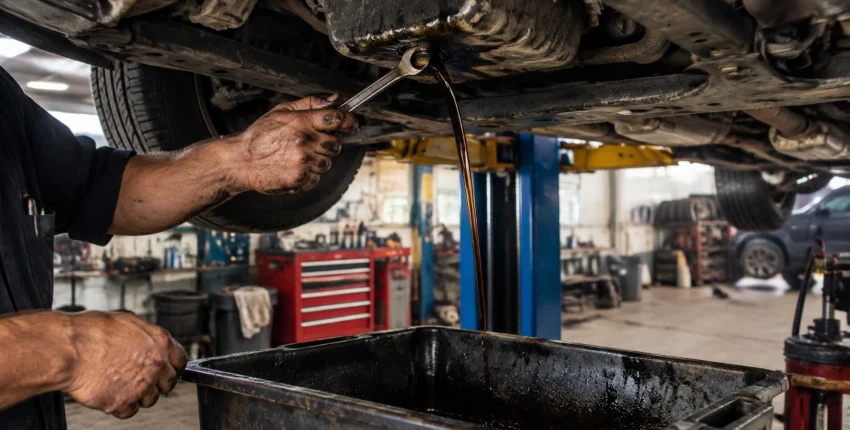
If you ask how long you can go between oil changes, you may hear everything from “every 3,000 miles” to “modern cars can go 10,000 miles without a problem.”
The honest answer is that both statements can be right, depending on your vehicle, oil type, driving habits, and the conditions your engine works through every day.
For many modern vehicles, the old 3,000-mile rule is no longer a universal requirement. But that does not mean every driver should wait until the oil-life monitor reaches zero or stretch an oil change as far as possible. Around Sleepy Hollow and Westchester County, frequent short trips, traffic, idling, hills, cold starts, and changing weather can place your vehicle in what manufacturers call “severe service.”
That is why the best interval is based on how you drive, not just the number on your odometer.
The old 3,000-mile rule is outdated, but maintenance is not
Older engines and conventional motor oils often needed more frequent oil changes. Today, many vehicles use improved engine designs, better filters, and synthetic oils that can last considerably longer.
Depending on the vehicle, a manufacturer may recommend an oil change around:
- 5,000 to 7,500 miles for certain vehicles and driving conditions
- 7,500 to 10,000 miles for some vehicles using full synthetic oil
- A specific time period, such as six or 12 months, even if you have not reached the mileage limit
Some vehicles may allow longer intervals, but the owner’s manual is the final authority. The required oil grade, viscosity, filter, and service schedule all matter.
The key point is this: “longer than 3,000 miles” does not mean “as long as you want.” Oil still collects fuel, moisture, combustion byproducts, and microscopic metal particles. Its additive package also becomes less effective over time.
As the Automotive Oil Change Intervals guidance from the Auto Care Association explains, the “normal” schedule in many owner’s manuals often assumes ideal conditions, such as longer highway trips. Many everyday drivers actually fall under the severe-service schedule.
How oil-life monitoring systems really work
Your dashboard oil-life percentage is useful, but it is not usually a laboratory test of the oil inside your engine.
Most oil-life monitoring systems estimate oil condition by tracking factors such as:
- Engine operating temperature
- Engine speed and run time
- Number of cold starts
- Short-trip driving
- Stop-and-go traffic
- Engine load and other operating conditions
The computer then estimates how quickly the oil is losing its ability to protect the engine.
A driver who spends most of the week on long highway trips may see the oil-life percentage drop slowly. Someone who makes repeated two- or three-mile trips through town may see it fall faster because the engine is experiencing more cold starts and may not reach full operating temperature.
It is important to reset the monitor after an oil change. If it is not reset correctly, the next interval may not be calculated accurately.
Even so, an oil-life monitor should not replace common sense. If your owner’s manual lists a separate severe-service schedule and your driving matches it, follow that schedule even if the dashboard seems to allow more time.
Why Westchester commuting often counts as severe service
“Severe service” sounds like it should apply only to police cars, work trucks, or vehicles towing trailers. In reality, the definition often includes ordinary driving patterns.
Your vehicle may qualify for severe service if you regularly deal with:
Short trips and cold starts
Trips of only a few miles are hard on engine oil, especially during colder months. The engine may not stay hot long enough to evaporate condensation and fuel that accumulate in the crankcase.
Early fall is a good time to think about this in Westchester. As temperatures drop, the first start of the morning puts additional demands on the battery, starter, engine, and oil. Short drives to school, work, errands, and the train station can add up even when your annual mileage is relatively low.
Stop-and-go traffic and idling
A commute through congested roads creates more engine operating time without adding many miles. Idling in traffic also adds heat and wear without providing the steady airflow of highway driving.
Repeated stop-and-go trips around Sleepy Hollow, Elmsford, and nearby Westchester communities may be considered severe service even if the vehicle feels like it is being driven gently.
Towing, hills, and heavy loads
Towing a trailer, carrying heavy cargo, or driving regularly on steep grades increases engine load. Turbocharged engines can also place additional heat and stress on the oil, particularly when the vehicle is driven hard or used for towing.
Extreme temperatures and dusty conditions
Very cold weather, intense heat, and dusty roads can all shorten the useful life of engine oil. The more demanding the conditions, the more important it is to follow the severe-service recommendations in your manual.
For many Westchester drivers, a practical interval may be closer to 3,000 to 5,000 miles or about six months. That is not a universal rule, and it should never override your vehicle manufacturer’s instructions. It is simply a reasonable reminder that average local driving is often tougher than the “normal” schedule suggests.
Signs your vehicle may be due for an oil change
Your vehicle may need service before the dashboard warning appears. Watch for:
- An oil-life monitor showing a low percentage
- An oil-change reminder or maintenance light
- An oil level below the safe mark on the dipstick
- A noticeable ticking or tapping sound from the engine
- A burning-oil smell inside or outside the vehicle
- Fresh oil spots under the car
- Rougher-than-usual engine operation
- Oil that has become thick, gritty, or contaminated
Dark oil alone does not always mean it is overdue. Fresh oil can become darker as it cleans and suspends contaminants. The level, texture, smell, mileage, time, and manufacturer schedule all provide better information together.
Also remember that the red oil-pressure warning light is not a routine oil-change reminder. It may indicate dangerously low oil pressure. If it comes on while driving, pull over safely and shut off the engine as soon as possible.
What happens when oil changes are stretched too far?
Old oil does not simply become less clean. It can lose the properties that help it flow, lubricate, cool, and protect sensitive engine components.
Over time, neglected oil changes can contribute to:
Sludge and blocked oil passages
Moisture, fuel contamination, and combustion byproducts can form thick deposits called sludge. Sludge may restrict oil flow and interfere with components that depend on clean oil pressure.
Timing chain and variable valve timing wear
Many modern engines use timing chains and oil-controlled variable valve timing systems. These components rely on clean oil moving through narrow passages and tensioners. Contaminated or degraded oil can increase wear and contribute to rattling, poor performance, or expensive timing repairs.
Turbocharger damage
Turbochargers operate at extremely high speeds and temperatures. They depend on a steady supply of clean oil for lubrication and cooling. Degraded oil can leave deposits in the turbocharger’s bearing areas and oil passages, increasing the risk of premature wear.
Low oil level and engine damage
Even if the oil itself is still within its mileage interval, a low oil level can be dangerous. Engines can consume or leak oil between services. Checking the level periodically is especially important on older, high-mileage, and turbocharged vehicles.
The value of a complete oil-change inspection
An oil change should be more than draining old oil and pouring in new oil.
At Mickey’s Automotive, our oil-change visit also gives us an opportunity to perform a multi-point inspection and identify developing problems while they are still manageable. We can look at common wear and safety items, including tire condition, brake components, fluid levels, leaks, belts, hoses, lights, and other visible concerns.

That does not mean every inspection results in a list of repairs. Sometimes the right answer is simply, “Everything looks good; come back at your next scheduled interval.” If we notice a concern, we explain what we found, how urgent it is, and what can reasonably wait.
We believe that is part of honest service. You should receive clear information and upfront pricing before approving additional work, not pressure at the counter.
Why choose Mickey’s Automotive for an oil change near Sleepy Hollow?
Mickey’s Automotive is a family-owned and operated shop serving the community since 1980. Our ASE-certified technicians bring more than 45 years of combined experience, along with advanced diagnostic equipment and practical knowledge of all vehicle makes and models.
We are also a proud NAPA AutoCare Center, offering dealership-level service without dealership prices. Whether you need a basic oil and filter change, help understanding your oil-life monitor, or broader car maintenance services, we will explain what your vehicle needs and why.
For drivers looking for dependable auto repair in Sleepy Hollow, that combination matters. Good maintenance is not about selling the most services. It is about protecting your vehicle, your safety, and your budget with the right service at the right time.
The honest bottom line
There is no single oil-change interval that fits every driver.
Use your owner’s manual as the starting point. Consider your oil type, vehicle age, engine design, driving pattern, weather, and the amount of idling or short-trip driving you do. For many local commuters, severe service is a more realistic description than the word “normal” suggests.
If you are unsure when your oil was last changed, do not guess. Book an oil change with Mickey’s Automotive or call us at 914-631-8868. We will check the correct service interval for your vehicle, use the appropriate oil and filter, inspect the car, and provide transparent recommendations before any additional work is performed.