A check engine light comes on, the engine starts running rough, or your fuel economy suddenly drops. It is tempting to search the symptom online, plug in a basic code reader, and replace the part mentioned in the result.
That approach can get expensive quickly.
A trouble code is useful information, but it is not a complete diagnosis. The same code may be triggered by several different problems, including a wiring fault, vacuum leak, failing sensor, fuel delivery issue, or mechanical concern. Replacing parts based on a guess may turn off the warning light temporarily while leaving the real problem untouched.
At Mickey’s Automotive, we use professional engine diagnostics to identify the cause before recommending a repair. We explain what we find, provide upfront pricing, and wait for your approval before any additional work begins.
Why Guessing at Car Problems Costs More
Modern vehicles are complicated systems. The engine, transmission, emissions equipment, sensors, computers, and electrical networks all work together. When one part of that system behaves outside its expected range, the vehicle may store a diagnostic trouble code.
That code usually describes a condition the computer detected. It does not always identify the failed component.
For example, a lean engine code could be related to:
- A vacuum leak
- A dirty or inaccurate airflow sensor
- Low fuel pressure
- A leaking fuel injector
- An exhaust leak
- Wiring or connector damage
Replacing the oxygen sensor simply because a code mentions oxygen sensor readings may not solve the issue. If the actual cause is a vacuum leak, the new sensor will still report abnormal readings. You may pay for the part and labor, only to see the same warning light return.
This is what technicians often mean by “throwing parts at the problem.” It is not a repair strategy. It is an expensive process of elimination, and the customer is usually the one paying for every incorrect guess.
A Drive-Thru Code Reader Is Only the Beginning
Many parts stores offer a quick code scan. That can be helpful when you want to know whether your vehicle’s computer has stored a code, but a basic scan is not the same as professional engine diagnostics.
A code reader may tell you:
- Which system reported a concern
- Whether a code is current or stored
- Whether the check engine light is on
- The general description connected to the code
It usually cannot, by itself, tell you why the fault occurred or whether a specific part has failed.
A professional diagnostic process goes further. We look at the code alongside your symptoms, the vehicle’s operating conditions, live data, wiring, connectors, mechanical condition, and test results. That additional information helps separate the root cause from the symptoms.
Clearing the code without finding the cause can also remove useful evidence. The vehicle may store information about the conditions present when the fault occurred, such as engine temperature, speed, load, and engine RPM. That information can help an experienced technician reproduce the problem and narrow the testing process.
Internet Diagnoses Can Miss the Details
Online advice is easy to find, but it is often based on limited information. A search for “rough idle” may produce dozens of possible causes. A video may show a repair for one vehicle that looks similar to yours but has a different engine, mileage, or failure pattern.
Internet research can help you describe what you are experiencing. It cannot replace hands-on testing.
A rough idle could come from an ignition misfire, intake leak, fuel problem, contaminated sensor, low compression, or another issue. A clicking sound might be harmless, or it could point to a serious mechanical problem. Without inspecting and testing the vehicle, it is impossible to know which possibility applies.
That is why we encourage drivers to bring us the symptoms, not a predetermined repair. Tell us when the issue started, whether it happens when the engine is cold or warm, and whether it occurs during starting, acceleration, braking, or idling. Those details can be just as valuable as the warning light itself.
What Professional Engine Diagnostics Actually Include
Professional diagnostics are not about plugging in a scanner and reading a sentence on a screen. They are a structured process designed to confirm the fault before a repair is recommended.
1. We listen to the complaint
The diagnostic process starts with your description of the problem. A vehicle that stalls only after a long drive may need a different testing approach than one that will not start in the morning. We want to understand what you feel, hear, smell, and see.
2. We verify the concern
When possible, we reproduce the symptom. We may inspect how the engine starts, idles, accelerates, or responds under load. This helps us determine whether the concern is constant, intermittent, or related to a specific driving condition.
3. We scan all relevant systems
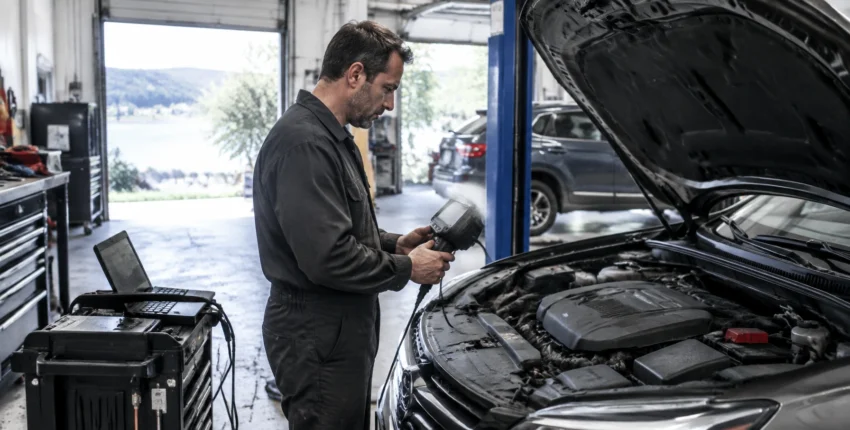
Our advanced diagnostic equipment allows us to retrieve stored, pending, and manufacturer-specific information from the vehicle’s computer systems. We do not treat a code as a final answer. We use it as a direction for further testing.
4. We review live data and vehicle history
Live data can show how sensors and systems are behaving while the engine is running. We may compare fuel-trim readings, temperature information, airflow measurements, ignition data, and other values with the vehicle’s actual symptoms.
Service history matters, too. A recent battery replacement, repair, accident, or maintenance visit may provide an important clue.
5. We test before replacing parts
Depending on the concern, testing may include voltage checks, resistance measurements, circuit testing, visual inspection, smoke testing, fuel pressure testing, or mechanical checks.
The goal is to find evidence that supports the repair. If a sensor has failed, we want the test results to show that. If the sensor is working correctly but reporting a real problem elsewhere, we want to identify that instead.
6. We verify the repair
After an approved repair, we confirm that the original concern has been addressed. This may include clearing codes, checking system operation, road-testing the vehicle, and reviewing whether the warning light or drivability issue returns.

Transparent Pricing Means No Surprise Repairs
Good diagnostics do not just protect your vehicle. They protect your budget.
At Mickey’s Automotive, we explain the recommended diagnostic work before we begin. If testing reveals a repair that requires additional time or parts, we provide clear information and upfront pricing. We do not move forward with additional work without your approval.
That means you can make an informed decision based on:
- What we found
- Why the repair is recommended
- What may happen if it is postponed
- How much the approved work will cost
- Whether additional testing is necessary
Sometimes a diagnostic inspection confirms a relatively simple repair. Other times, it uncovers a larger concern that deserves careful consideration. Either way, knowing the facts is better than spending money on parts that may not solve the problem.
Professional Diagnostics Are Part of Smart Car Maintenance
Engine diagnostics are not only for vehicles with a check engine light. They can also help investigate poor fuel economy, hard starting, hesitation, stalling, unusual noises, reduced power, or an engine that simply does not feel right.
Addressing those symptoms early may help prevent a small issue from becoming a larger repair. For example, an unresolved misfire can place extra stress on emissions components. A cooling problem can lead to overheating. An airflow or fuel issue can affect performance and fuel consumption for weeks before a warning becomes obvious.
Regular car maintenance services also give technicians the opportunity to notice developing concerns before they leave you stranded. Diagnostics, inspections, oil changes, brake service, and other maintenance work all play a role in keeping a vehicle dependable.
Why Sleepy Hollow Drivers Choose Mickey’s Automotive
Mickey’s Automotive is a family-owned business serving the community since 1980. Our ASE-certified technicians bring more than 45 years of combined experience to vehicle diagnostics, maintenance, and repair.
We are also a proud NAPA AutoCare Center. Our shop provides dealership-level service without dealership prices, with advanced diagnostic equipment for all makes and models.
Most importantly, we believe automotive service should be understandable. Whether you need engine diagnostics in Sleepy Hollow or a broader auto repair appointment in Sleepy Hollow, we will explain what we find and what your options are before work is approved.
Stop Guessing and Get the Real Answer
A warning light, strange noise, or rough-running engine is stressful enough without paying for repairs that do not fix the problem. Professional engine diagnostics replace guesswork with testing, evidence, and a clear repair plan.
If your vehicle is showing symptoms or the check engine light is on, schedule an appointment with Mickey’s Automotive. We will inspect the concern, explain the findings in plain language, and provide transparent upfront pricing before approved repairs begin.
Book your diagnostic appointment with Mickey’s Automotive or call us at 914-631-8868.